top of page

Appalachian Grizzled Skipper Butterfly

Girl Scout Gold Award Project by Olivia Baldwin

Home: Welcome

About

Hear It From Me

Welcome! I am a Girl Scout of Northern New Jersey who is working on earning my Gold Award. The Gold Award is the Girl Scout's equivalence to the Boy Scout Eagle Award. For my project I am going to raise awareness and rebuild habitat for an endangered species called the Appalachian Grizzled Skipper Butterfly. This butterfly is historically native to northern NJ. Sadly their numbers are going down due to habitat loss. My goal is to raise awareness of this issue and to focus on increasing the number of the host plant (Dwarf cinquefoil) for the Skippers’ habitat. And increase the ability for the Appalachian Grizzled Skipper to survive.

Home: About
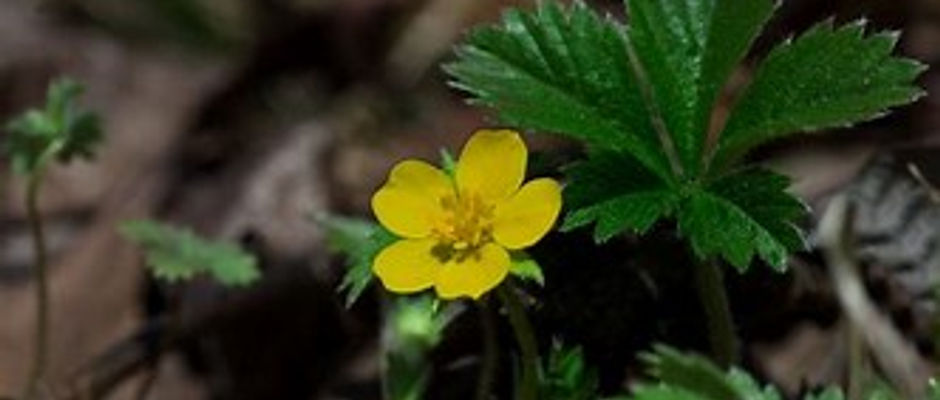
potentilla-canadensis-le-mwalker.jpg

     This butterflies’ host plant is the dwarf cinquefoil; it is an attractive yellow flower, a member of the rose family and native to the East Coast. This flower has multiple benefits and is recognized by pollination ecologists from the Xerces Society for Invertebrates as also attracting large numbers of native bees. By letting the general public, businesses and agencies know about this issue and including volunteers to plant I hope to restore habitat and maintain biodiversity.

Joseph Haydn

Home: Quote

Causes

One of the causes for this drop in numbers is most likely driven by the efforts put forth to control the invasive Gypsy Moth. Pesticides are sprayed and they contaminate the shared living conditions between the moth and the Skipper. 

     It is important to consider this limitation when scouting a proper planting site.  

     Another cause could be due to the flower's living conditions. The dwarf cinque

Home: About

GENERAL BOTANICAL CHARACTERISTICS Sited from https://www.skymeadows.info/dwarf-cinquefoil#! :


Habit: Dwarf cinquefoil is a small, low, prostrate and spreading plant

with runners, rooting at the nodes and with leaves and flowers on separate

silvery-downy stems arising from the runner. It grows to 2-6 inches (5-15

cm) tall, with the stem becoming prostrate after flowering.


Flowers: It has yellow flowers blooming singly on long stalks rising from

the axils. Flowers are 1/2-2/ inches (1.3-1.6 cm) wide with 5 sepals and 5

petals, and with numerous stamens and pistils.


Roots: Common Cinquefoil can form large mats in open areas. The plants

send out new roots as they creep along. Its even been known to reproduce vegetatively by sending out clones from the ends of the plant, known as

tip-rooting.


REGENERATION PROCESS: Dwarf cinquefoil propogates itself by

reseeding; root runners also contribute to spread.


HABITAT TYPES: Dwarf cinquefoil is found in fields and woods.


SITE CHARACTERISTICS: Dwarf cinquefoil prefers dry open soil.

This species has be tendency to grow in sterile soils and can be used as

an indicator of soil quality.


SEASONAL DEVELOPMENT: Dwarf cinquefoil is one of the earlier

blooming forbs, beginning in early spring and flowering until early sum-

mer (March through June).

Home: About

DISTRIBUTION AND HABITAT

This species ranges from the Mid-Atlantic region, west to Michigan, Ohio, and Kentucky; north-south from New York to North Carolina.
They can be found in open, sparsely grassed and/or barren areas in close proximity (usually less than 100ft.) to oak or pine forests (Schweitzer 1989a). An important habitatrequirement for this species is its host plant, Dwarf cinquefoil (Potentilla canadensis).

    The Conserve Wildlife Foundation of NJ has stated that "In New Jersey, larvae (caterpillars) feed exclusively on Dwarf cinquefoil. Adults feed on nectar from a variety of plants, including dwarf cinquefoil, wood vetch (Vicia caroliniana), coltsfoot (Tussilago farfara), spring beauty (Claytonia virginica), and birdsfoot violet (Viola pedata) (Iftner et. al. 1992; Schweitzer 1989b)." 

Home: Quote
Election Campaign

About The Blog

The Roots

I believe you must bring your whole self to the table if you want to thrive in today’s crazy world; your personality, your sense of humor, and most importantly, your heart. All of these elements brought me to start "Don't Skip Skippy!".

Ever since I launched this project, the blog has been thriving and has quickly gained a loyal following. To see what I’ve been up to, browse my site, learn about my passions, and explore what excites and interests you as well.

Home: About

How to Help


The Appalachian Grizzled Skipper Butterfly needs our help by expanding its habitat of the dwarf cinquefoil without the use of pesticides.


Home: Text
Search

Don't Skip Skippy!

What's the Problem? The numbers are dropping for the Appalachian Grizzled Skipper Butterfly. According to the Conserve Wildlife...

Host Plant

This butterfly's host plant is the dwarf cinquefoil; it is an attractive yellow flower, a member of the rose family and native to the...

Home: Blog2
  • facebook
  • twitter
  • linkedin
  • generic-social-link

©2019 by "Don't Skip Skippy!". Proudly created with Wix.com

bottom of page